© 2026 Mark Vedberg
Case Study: Resilience in Northern Transit
In our bachelor's thesis, we addressed the question of how local communities can benefit from the expansion of renewable energies. For this purpose, we developed a digital platform for energy communities, with which citizens can promote regional expansion of renewable energies quickly and easily. Members of these communities can use the new.
Case Study: Resiliance and agency in transit
In our bachelor's thesis, we addressed the question of how local communities can benefit from the expansion of renewable energies. For this purpose, we developed a digital platform for energy communities, with which citizens can promote regional expansion of renewable energies quickly and easily. Members of these communities can use the new.
Context
Project 2 - General Product at Umeå Institute of Design
Collaborator
Norrtåg + Biofuel Region
Timeline
8 weeks in 2026
People
Aditi, Oğuzhan, Alma and me


Music creation is its own practice
Children are often introduced to music through listening, performing or learning an instrument. Creating music is a different practice: inventing melodies, rhythms, sounds, lyrics and structures rather than reproducing something that already exists. That distinction matters because access to one kind of musical activity does not automatically create access to the others.


Children are encouraged to draw long before they can draw “well.” Music creation is rarely introduced the same way. It is often placed behind instrumental skill, theory or technical tools, making creation.
Children are encouraged to draw long before they can draw “well.” Music creation is rarely introduced the same way. It is often placed behind instrumental skill, theory or technical tools, making creation feel like something that comes later rather than something children can simply begin doing. The project starts from the idea that creating music should be accessible before mastery, just like drawing.
Researching the barriers
The project was grounded in deep qualitative research into how children relate to music, creativity, hobbies, friends and their own ability to make things. The aim was not just to identify usability problems, but to understand what actually gets in the way when children first encounter music creation. That research continued throughout the project through expert input, co-creation, user testing and iteration with the same.
Researching the barriers
Laid out at the core of your trip view are the most important things to have with you; Information and your ticket. The widgets offers an exhaustive overview while the personalized message draws from all information available and is tailored to your personal trip.

Deep dive interviews took place to really understand nilangpwnhwånh
Our Service
How What do I make?
I initially expected the main barrier to music creation to be technical: knowing how to play an instrument, understand music theory, or use complex software. Those barriers matter, but they were not the main problem I found. Even with simple tools, children can still struggle with what to actually make. Starting from nothing can feel intimidating, especially when the music they know is highly polished and professional. The problem is not only being able to make music, but knowing how to begin without already having an idea or clear direction.
How What do I make?
Laid out at the core of your trip view are the most important things to have with you; Information and your ticket. The widgets offers an exhaustive overview while the personalized message draws from all information available and is tailored to your personal trip.
Creating together generates inspiration and direction while sharing the pressure of coming up with ideas. Children wanted to make music with others, but lacked tools for genuine co-creation. Opus therefore uses the board game as a democratic interface: one shared surface, equally visible and accessible to everyone.
Travel Kit
Creating together generates inspiration and direction while sharing the pressure of coming up with ideas. Children wanted to make music with others, but lacked tools for genuine co-creation. Opus therefore uses the board game as a democratic interface: one shared surface, equally visible and accessible to everyone.
Travel Kit
The physical infrastructure of the trains are utilized to make information more available and playful in important moments aboard or boarding.
The existing infrastructure of the physical trains are utilized to make information more available in important moments aboard or boarding.
Train as a source of info

The train exterior can reflect the interior layout with just a coat of paint, helping those split time decisions

The outwards facing train displays are utilized to show seat capacity of the different train cars
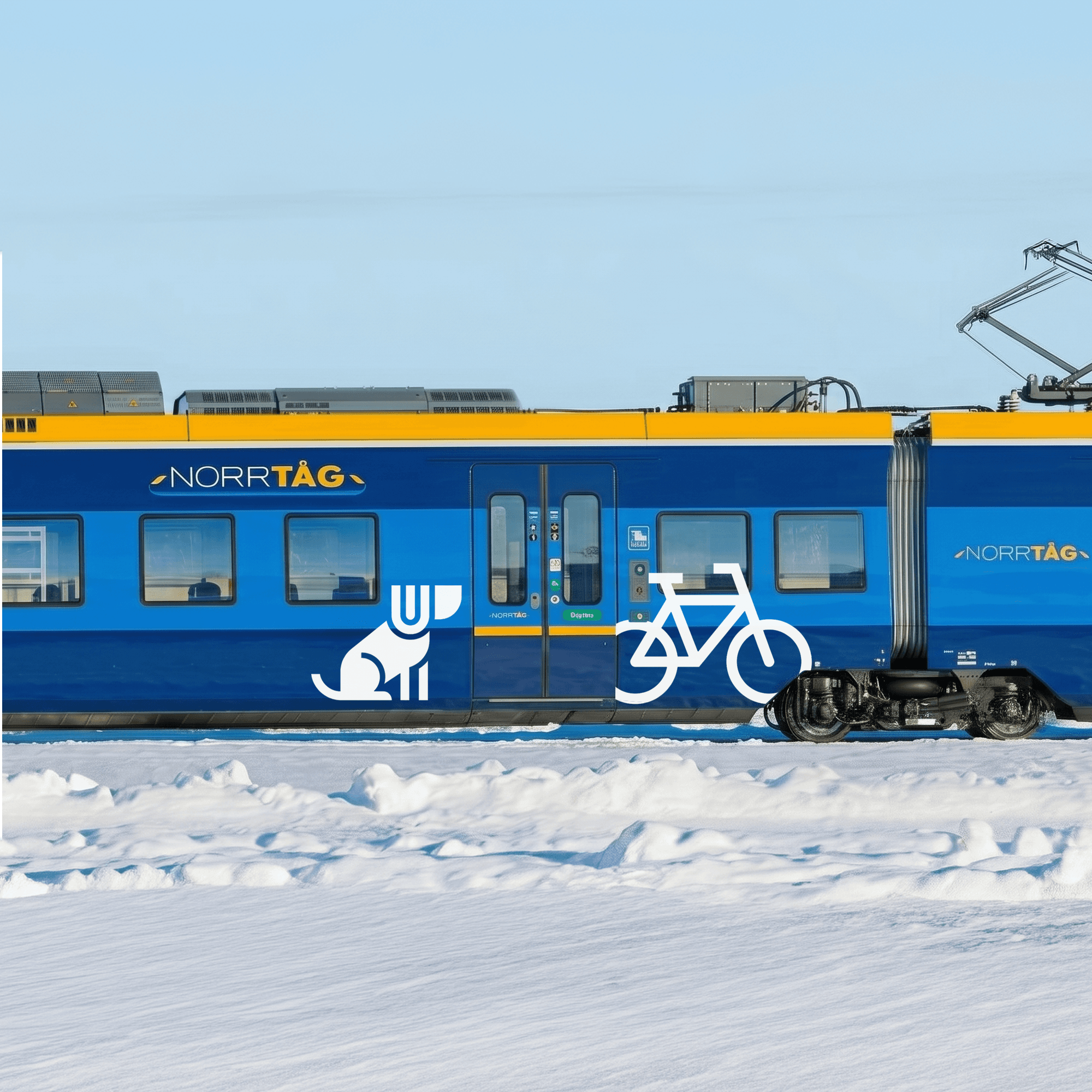
Waiting for passing trains is made less jarring and more playful using the on-train displays
How What do I make?
I initially expected the main barrier to music creation to be technical: knowing how to play an instrument, understand music theory, or use complex software. Those barriers matter, but they were not the main problem I found. Even with simple tools, children can still struggle with what to actually make. Starting from nothing can feel intimidating, especially when the music they know is highly polished and professional. The problem is not only being able to make music, but knowing how to begin without already having an idea or clear direction.
How What do I make?
Laid out at the core of your trip view are the most important things to have with you; Information and your ticket. The widgets offers an exhaustive overview while the personalized message draws from all information available and is tailored to your personal trip.
Once a direction starts to emerge, random discovery is no longer enough. Users need to be able to act on what they like and shape the music more deliberately. Loops can be replaced, regenerated, saved and revisited. Previously discovered sounds stay available, and the composition itself can be rearranged, sped up, slowed down or moved into a different template.
Taking control
Once a direction starts to emerge, random discovery is no longer enough. Users need to be able to act on what they like and shape the music more deliberately. Loops can be replaced, regenerated, saved and revisited. Previously discovered sounds stay available, and the composition itself can be rearranged, sped up, slowed down or moved into a different template.
Taking control
Once a direction starts to emerge, random discovery is no longer enough. Users need to be able to act on what they like and shape the music more deliberately. Loops can be replaced, regenerated, saved and revisited. Previously discovered sounds stay available, and the composition itself can be rearranged, sped up, slowed down or moved into a different template.
Once a direction starts to emerge, random discovery is no longer enough. Users need to be able to act on what they like and shape the music more deliberately. Loops can be replaced, regenerated, saved and revisited. Previously discovered sounds stay available, and the composition itself can be rearranged, sped up, slowed down or moved into a different template.

Once a direction starts to emerge, random discovery is no longer enough. Users need to be able to act on what they like and shape the music more deliberately. Loops can be replaced, regenerated, saved and revisited. Previously discovered sounds stay available, and the composition itself can be rearranged, sped up, slowed down or moved into a different template.
Once a direction starts to emerge, random discovery is no longer enough. Users need to be able to act on what they like and shape the music more deliberately. Loops can be replaced, regenerated, saved and revisited. Previously discovered sounds stay available, and the composition itself can be rearranged, sped up, slowed down or moved into a different template.
How What do I make?
I initially expected the main barrier to music creation to be technical: knowing how to play an instrument, understand music theory, or use complex software. Those barriers matter, but they were not the main problem I found. Even with simple tools, children can still struggle with what to actually make. Starting from nothing can feel intimidating, especially when the music they know is highly polished and professional. The problem is not only being able to make music, but knowing how to begin without already having an idea or clear direction.
How What do I make?
Laid out at the core of your trip view are the most important things to have with you; Information and your ticket. The widgets offers an exhaustive overview while the personalized message draws from all information available and is tailored to your personal trip.
Goobi
Sustainable and accessable from the start
A physical product intended for children and schools has to be responsible beyond the experience of using it. Sustainability means taking responsibility for the material and technological footprint of something that could be produced at scale. Accessibility also means more than making music easy to approach: the system itself has to be realistically available, affordable and usable in the environments it is designed for. These concerns shaped Opus from the beginning, leading to a low-tech, open and adaptable approach.

Gathering Flowers, Shinnecock, Long Island (1897) by William Merritt Chase
Smartphones already contain most of the expensive, resource-intensive hardware Opus would otherwise need to reproduce: high-resolution screens, processors, batteries, storage, microphones, speakers and wireless connectivity. Rather than building these into the product again, Opus keeps its own hardware simple and temporarily borrows that existing capability. This reduces both material use and cost without reducing functionality.
Using hardware that already exists
Smartphones already contain most of the expensive, resource-intensive hardware Opus would otherwise need to reproduce: high-resolution screens, processors, batteries, storage, microphones, speakers and wireless connectivity. Rather than building these into the product again, Opus keeps its own hardware simple and temporarily borrows that existing capability. This reduces both material use and cost without reducing functionality.
Using hardware that already exists
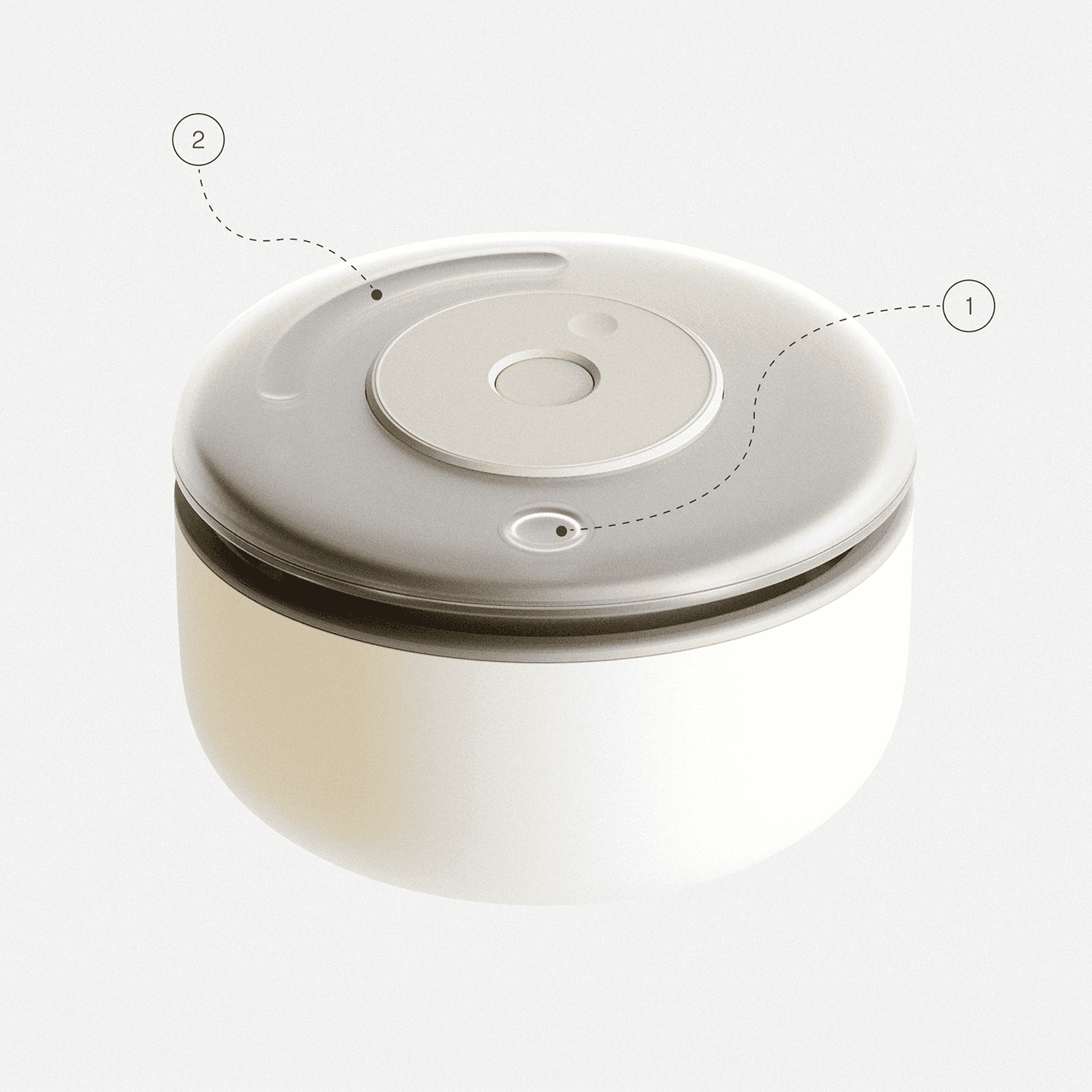
Using phones only works if they do not become the centre of the experience. In Opus, the phone becomes an interface only when placed in a designated position, effectively lending its screen and processing power to the system. Core musical actions remain physical and shared, while the phone is reserved for tasks that benefit from a screen, such as browsing, saving, loading and uploading. Only one phone is needed for a group, so participation does not depend on every child owning a device.
Using phones only works if they do not become the centre of the experience. In Opus, the phone becomes an interface only when placed in a designated position, effectively lending its screen and processing power to the system. Core musical actions remain physical and shared, while the phone is reserved for tasks that benefit from a screen, such as browsing, saving, loading and uploading. Only one phone is needed for a group, so participation does not depend on every child owning a device.

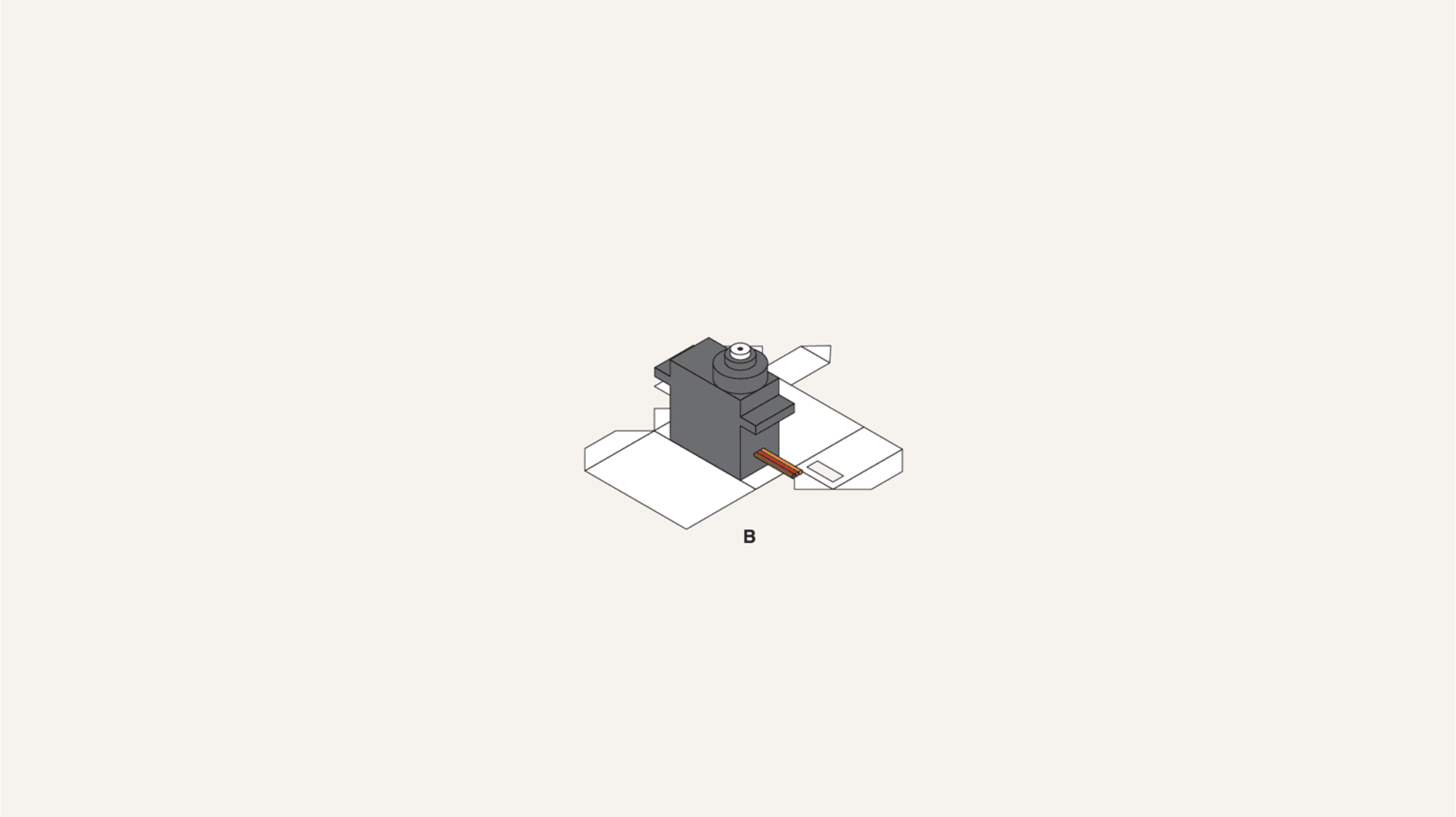
Modularity does not have to mean adding more electronics. Instead of interchangeable technical modules, Opus keeps the board itself fixed and moves variation into paper templates and software. This keeps the hardware simpler, cheaper and easier to maintain, while still allowing the system to change radically depending on the template in use.
Replacing hardware with paper
Modularity does not have to mean adding more electronics. Instead of interchangeable technical modules, Opus keeps the board itself fixed and moves variation into paper templates and software. This keeps the hardware simpler, cheaper and easier to maintain, while still allowing the system to change radically depending on the template in use.
Replacing hardware with paper

Because Opus stores variation in paper and software, the same hardware can keep expanding through new templates, loop libraries and Loop Station tools. Making those layers open source means that expansion is not limited to official updates. Users, schools and communities can also create, adapt and share their own content, allowing the system to grow without requiring new hardware.
Growing through software and community
Because Opus stores variation in paper and software, the same hardware can keep expanding through new templates, loop libraries and Loop Station tools. Making those layers open source means that expansion is not limited to official updates. Users, schools and communities can also create, adapt and share their own content, allowing the system to grow without requiring new hardware.
Growing through software and community
Open source also gives users real ownership over the system. Opus is not dependent on ongoing subscriptions, locked software or the company continuing to support it. That matters especially for schools: buying the system means actually owning something that can be maintained, adapted and kept in use over time. Simple hardware and open software also make repair and future compatibility more realistic.
Open source also gives users real ownership over the system. Opus is not dependent on ongoing subscriptions, locked software or the company continuing to support it. That matters especially for schools: buying the system means actually owning something that can be maintained, adapted and kept in use over time. Simple hardware and open software also make repair and future compatibility more realistic.
Reflections
In our bachelor's thesis, we addressed the question of how local communities can benefit from the expansion of renewable energies. For this purpose, we developed a digital platform for energy communities, with which citizens can promote regional expansion of renewable energies quickly and easily. Members of these communities can use the new.